
Swarm robotics refers to the coordination of multiple autonomous robots that operate collectively to achieve tasks more efficiently than individual units. Inspired by social behaviors observed in insects such as bees or ants, swarm robotics emphasizes distributed control, decentralized decision-making, and collaborative problem-solving. In industrial automation, these principles enable groups of robots to work together seamlessly, adapt to dynamic environments, and respond to real-time challenges. Understanding the foundational concepts of swarm robotics provides insight into how industries can leverage collective robotic behavior to enhance productivity, flexibility, and operational efficiency.
Enhancing Efficiency and Productivity
One of the primary benefits of swarm robotics in industrial settings is improved efficiency and productivity. Multiple robots can perform repetitive or complex tasks simultaneously, reducing the time required to complete production processes. Tasks such as material handling, assembly, and inventory management can be divided among a swarm of coordinated units, minimizing delays caused by human limitations or single-robot bottlenecks. By distributing workloads and enabling parallel processing, swarm robotics allows industries to achieve higher throughput and maintain consistent quality standards while reducing operational strain on individual machines.
Flexibility and Adaptability in Operations
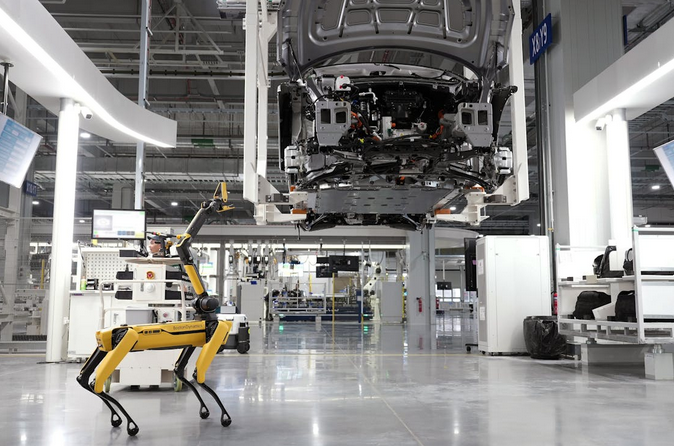
Swarm robotics also enhances the flexibility and adaptability of industrial operations. Unlike traditional automated systems that rely on fixed programming or centralized control, swarms can dynamically adjust to changing conditions. If one robot encounters an obstacle or fails, others can compensate, ensuring continuity of operations. This adaptability is particularly valuable in environments with variable demand, unpredictable production challenges, or complex logistics. The ability to reconfigure tasks and respond to real-time conditions allows manufacturers to maintain efficiency while accommodating evolving operational requirements.
Cost Reduction and Resource Optimization
Implementing swarm robotics can reduce costs and improve resource utilization. Coordinated robotic systems often require less human intervention, reducing labor costs and minimizing human error. Maintenance can be more targeted, as distributed monitoring allows issues to be detected early and addressed efficiently. Additionally, the modular nature of swarms allows systems to be scaled up or down according to demand, optimizing resource allocation without major infrastructure changes. By improving efficiency, reducing downtime, and streamlining operations, swarm robotics offers both economic and operational advantages for industrial facilities.
Challenges and Integration Considerations

Despite its potential, adopting swarm robotics in industrial automation presents challenges. Integrating large numbers of autonomous units requires sophisticated communication protocols, real-time data processing, and robust algorithms to ensure coordinated behavior. Cybersecurity, system reliability, and safety considerations are also critical, particularly when swarms operate alongside human workers. Moreover, workforce adaptation and training are necessary to effectively manage and maintain these systems. Addressing these challenges is essential for organizations to fully realize the benefits of swarm robotics without compromising operational safety or efficiency.
Swarm robotics is transforming industrial automation by enabling collaborative, adaptive, and efficient robotic systems. By enhancing productivity, flexibility, and resource optimization, swarms of autonomous robots provide significant advantages over traditional single-unit automation. While challenges related to integration, safety, and workforce adaptation remain, the strategic implementation of swarm robotics promises to redefine manufacturing and logistics processes. As industries continue to embrace this technology, swarm robotics will play a pivotal role in advancing automation, improving operational performance, and supporting the evolution of intelligent industrial systems.
…